
Latest Developments in the Philips CPAP Lawsuits
 The widespread recall of Philips CPAP, BiPAP, and ventilator devices has touched millions of lives globally. Many users are now seeking answers about the health risks from the faulty foam and what legal options they have. These events have led to a large number of lawsuits and significant court actions.
We know that understanding these legal updates can be confusing. Our goal is to give you a clear look at the latest news on the Philips CPAP lawsuits in both Canada and the United States. We will cover the recent agreements, who they affect, what money you might get, and important dates you need to know.
To help you understand these big legal cases, also known as JusticeHero CPAP Mass Torts, we will explain the main claims against Philips. We will also show the difference between money paid for costs and money paid for health problems. By the end, you will have a better idea of what these legal steps mean for you.
The legal landscape surrounding Philips’ recalled respiratory devices continues to evolve, with significant developments on both sides of the Canadian-U.S. border. Most recently, a proposed partial settlement has been reached in the Canadian class action lawsuit against Philips concerning its recalled sleep apnea devices. This agreement represents a crucial step for Canadian consumers seeking recompense for financial losses.
Philips has agreed to pay $20,000,000 to resolve economic loss claims for Canadian users. This settlement, however, does not cover personal injury claims, which are being pursued separately. The agreement awaits court approval, with hearings scheduled for September 2025. This Canadian development follows massive settlements in the United States, where Philips agreed to pay an impressive $1.1 billion for personal injury claims and a separate $479 million for economic losses. These multi-billion dollar settlements underscore the serious nature and widespread impact of the Philips recall, highlighting the company’s accountability for defective products.
The distinction between economic loss claims and personal injury claims is paramount. Economic loss settlements typically cover the financial burden incurred by consumers, such as the cost of the device itself, replacement costs, and other related expenses. Personal injury settlements, on the other hand, address the physical and emotional suffering, medical expenses, lost wages, and other damages resulting from direct harm caused by the defective product. The Canadian partial settlement, by focusing solely on economic losses, allows for a more streamlined resolution for financial claims while preserving the rights of individuals to pursue compensation for health-related damages.
The sheer scale of these legal actions reflects the extensive reach of the Philips recall. Millions of devices were affected worldwide, leading to a complex web of legal proceedings. For affected individuals, staying informed about these updates is crucial to understanding their rights and the potential avenues for compensation.
The Canadian Economic Loss Settlement Explained
The proposed $20 million settlement in Canada is designed to compensate users for financial losses incurred due to the recall of their Continuous Positive Airway Pressure (CPAP), BiPAP, and ventilator devices. It is crucial to understand that this settlement only addresses economic damages, not health-related issues. This means that if you suffered a physical injury or illness due to the recalled device, this specific settlement will not provide compensation for those medical claims.
Who is Included in the Canadian Class Action?
To be eligible for this economic loss settlement, you must be a Class Member. You are considered a Class Member if you purchased or leased one of the recalled Philips devices in Canada between January 1, 2008, and June 14, 2021. This broad definition ensures that a significant number of affected Canadian consumers can seek compensation for their financial losses. The class action aims to provide a collective remedy, reducing the burden on individual consumers to pursue separate legal actions for similar claims.
What Compensation Can Class Members Receive?
If the court approves the settlement, eligible Class Members can apply for two primary types of payments:
- Universal Device Payment: This payment offers up to $125.00 for each recalled device you owned or leased. This component of the settlement aims to provide a baseline level of compensation for the inconvenience and financial impact of owning a defective product. The specific amount you receive may depend on various factors, including the total number of claims filed and the final approved distribution plan.
- Replacement Payment: This payment offers reimbursement for a portion of the cost of a replacement device. The amount you can receive is calculated based on the age of your recalled machine at the time of the recall. For instance, devices less than 3 years old might receive a higher percentage of their replacement cost compared to older devices. This tiered approach acknowledges the depreciating value of the equipment over time.
The settlement fund will also be used to cover court-approved legal fees (up to 30%) and administration costs. These deductions are standard in class action settlements and cover the significant legal work and logistical efforts required to bring about and manage such a large-scale resolution. While a portion of the settlement goes towards these costs, the collective action often provides a means for individuals to recover losses that might otherwise be too costly to pursue independently.
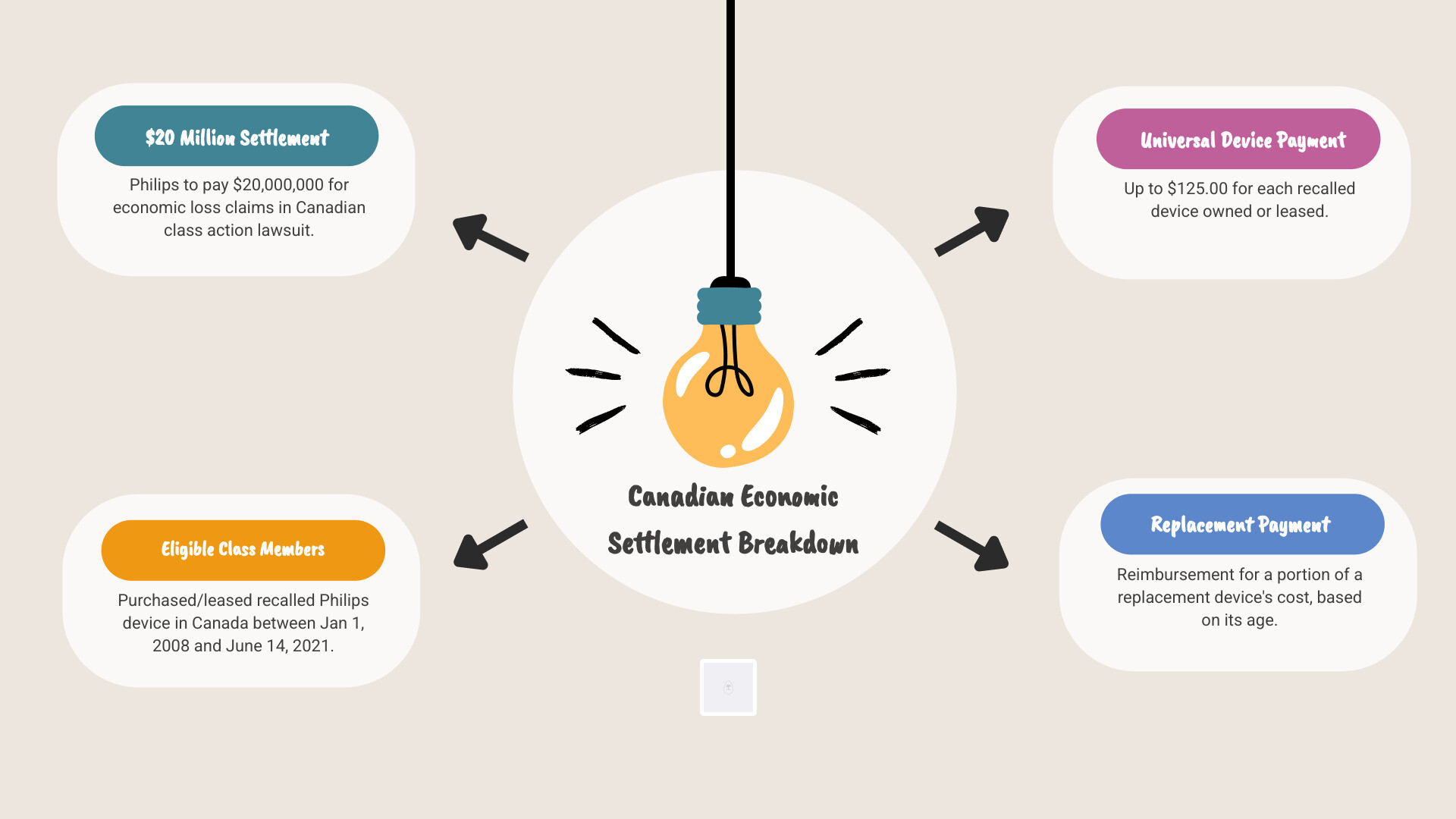 {: .align-center} Figure 1: Breakdown of the Canadian Economic Loss Settlement.
Critical Deadlines and Options for Canadian Users
For Canadian Class Members, understanding and adhering to critical deadlines is essential. Your ability to participate in the settlement, opt out, or object to its terms directly impacts your legal rights and potential compensation. We strongly advise all affected individuals to pay close attention to these dates.
How to Participate, Opt-Out, or Object
- Participate: If you wish to participate in the economic loss settlement and receive compensation, you generally do not need to take immediate action beyond ensuring you meet the Class Member definition. However, it is highly recommended that you register for the mailing list to receive timely updates on the claims process once the settlement is approved. This will ensure you are directly notified about how and when to submit your claim for compensation, avoiding any missed opportunities.
- Opt-Out: If you do not wish to be bound by the terms of this partial settlement and prefer to retain your right to sue Philips individually for economic losses, you must formally opt out of the class action. The deadline to submit an Opt-Out Form is September 15, 2025. Choosing to opt out means you will not receive any benefits from this specific settlement, but you preserve your right to pursue your own legal action. We recommend consulting with legal counsel before making this decision, as individual lawsuits can be complex and costly.
- Object: If you agree with the concept of a settlement but disagree with specific terms or the amount offered, you have the right to object. To do so, you must submit a written objection by August 31, 2025. Your objection should clearly state your reasons and be submitted to the appropriate settlement administrator or court. This process allows Class Members to voice concerns before final approval.
- Philips Replacement Program: Separate from the class action settlement, Philips has its own program for replacing recalled devices. The deadline to register for a replacement device directly from Philips is December 31, 2024. You can register at the Philips recall update page. Participating in Philips’ replacement program does not automatically remove you from the class action; these are distinct processes. However, receiving a replacement device may impact the amount of Replacement Payment you are eligible for through the class action settlement.

Figure 2: Key Deadlines for Canadian Philips CPAP Class Action.
The Heart of the Lawsuit: Defective Foam and Severe Health Risks
The global litigation against Philips stems from a critical design flaw: the polyester-based polyurethane (PE-PUR) sound abatement foam used in millions of its respiratory devices. This foam, intended to reduce noise and vibration, has been found to degrade over time. It is alleged that this degradation can release toxic black particles and chemical gases that users may inhale or ingest during the normal operation of their devices. This fundamental defect is at the core of the widespread health concerns and subsequent legal actions.
Allegations and Potential Health Consequences
The core allegations against Philips are grave: that the company knew about the foam degradation for years, potentially as far back as 2008, but failed to warn the public or take adequate corrective action until the widespread recall in 2021. This alleged negligence forms a significant basis for the lawsuits.
Exposure to these degraded foam particles and chemical emissions has been linked to a range of serious health issues. Regulatory bodies, including the FDA, have received an alarming number of reports. The FDA has received over 105,000 medical device reports, including 385 reported deaths, related to the foam. These reports detail a spectrum of adverse health effects, from irritation to life-threatening conditions.
Potential health risks associated with inhaling or ingesting the degraded PE-PUR foam and its chemical byproducts include:
- Various forms of CPAP Cancer, including lung, kidney, and liver cancer. Lawsuits have also cited concerns regarding bladder, brain, breast, prostate, and stomach cancers.
- Severe respiratory illnesses like pulmonary fibrosis, asthma, bronchitis, and other inflammatory responses in the airways.
- Damage to vital organs, specifically the lungs, liver, or kidneys, which can lead to chronic conditions or organ failure.
- Inflammation, headaches, dizziness, nausea, vomiting, and other systemic symptoms that can significantly impact a user’s quality of life.
- Irritation of the skin, eyes, and respiratory tract.
The implications of these health risks are profound, affecting not only the direct users of these devices but also their families and healthcare providers. A full list of the recalled CPAP, BiPAP, and ventilator devices is available on the class action website, allowing individuals to verify if their specific device is affected. We encourage all users to check this list and consult with their healthcare provider if they have any concerns.

Figure 3: Illustration of PE-PUR foam degradation in CPAP devices.
Personal Injury Claims Are Not Part of the Canadian Settlement
It is essential for Canadian users to understand that the $20 million partial settlement discussed above does not release or compensate for any personal injury claims. This settlement is strictly for economic losses, such as the cost of the device or replacement expenses. If you or a loved one used a recalled Philips device and subsequently developed cancer or another serious health condition, your right to seek compensation for those injuries is unaffected by this economic loss settlement. This means that individuals who have suffered direct physical harm retain their ability to pursue separate legal action for those damages.
These personal injury claims are continuing to be pursued separately by class counsel. The legal teams involved recognize the distinct nature of these claims and the profound impact that health issues can have on individuals and their families. If you believe you have suffered health issues due to a recalled device, you may still be able to join the ongoing CPAP Lawsuit. These lawsuits aim to hold Philips accountable for the alleged harm caused by their defective products and seek fair compensation for medical expenses, pain and suffering, lost income, and other damages incurred due to serious injuries or illnesses.
The process for personal injury claims is often more complex than economic loss claims, requiring detailed medical documentation, expert testimony, and a thorough understanding of product liability law. For those navigating these challenges, understanding the nuances of how mass torts operate can be incredibly beneficial. For more detailed insights into the mechanisms and progress of such large-scale litigations, we recommend exploring resources on mass torts.
What Happens Next?
The Canadian economic loss settlement represents a significant milestone, but it is not yet final. The agreement requires court approval before it becomes binding and compensation can be distributed. The approval hearings are scheduled for:
- Quebec: September 19, 2025
- British Columbia: September 29, 2025
These hearings are crucial steps in the legal process, where the courts will review the terms of the settlement to ensure it is fair, reasonable, and in the best interests of the Class Members. Following court approval, a claims administration process will be established. This process involves setting up a system for Class Members to submit their claims for compensation, verify their eligibility, and ultimately receive their payments. Class Members who have registered for updates will be notified directly on how to submit their claims and the necessary documentation. For comprehensive and up-to-date information, you can always visit the official Canadian class action website or contact Class Counsel directly.
If you have suffered an injury and are considering legal action, it is advisable to speak with an experienced CPAP Lawyer. Legal professionals specializing in product liability and mass torts can provide invaluable guidance, assess the strength of your case, and help you understand your legal options. They can also assist with the complex process of gathering evidence, filing claims, and negotiating for fair compensation. For a free case evaluation and to understand your legal options, please visit our CPAP contact form. We are committed to helping individuals understand their rights and pursue justice for corporate wrongdoing.
Figure 4: Seeking legal advice for CPAP-related injuries.
The Philips CPAP lawsuit highlights the critical importance of corporate responsibility in ensuring product safety. While these legal battles are often lengthy and complex, they serve as a vital mechanism for consumers to seek redress and for companies to be held accountable. We will continue to monitor these developments and provide updates as they become available.