
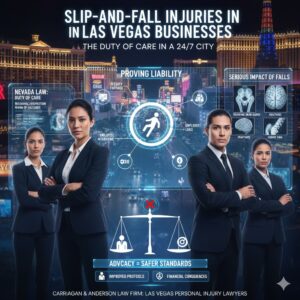
The glittering spectacle of the Las Vegas Strip and the bustling activity of its local businesses are central to the city’s identity. For millions of visitors and residents, these spaces are for entertainment, dining, and commerce. Yet, when a property owner fails to maintain a safe environment, a simple misstep can lead to a life-altering slip, trip, or fall. These incidents are among the most common—and frequently misunderstood—forms of premises liability claims. In Las Vegas, where tourism drives the economy and businesses operate at a relentless pace, understanding the legal nuances of slip-and-fall injuries is crucial for both consumers seeking justice and for businesses aiming to uphold their duty of care. Far from frivolous, these cases address a fundamental responsibility: to keep invited guests safe from known or reasonably discoverable hazards.
The Duty of Care in a 24/7 City
Nevada law requires property owners and occupiers to maintain their premises in a reasonably safe condition for “invitees”—people who are there for the mutual economic benefit of both parties, such as customers, guests, and tourists. In Las Vegas, this duty is especially significant. The constant flow of people, combined with factors like spilled drinks in casinos, wet floors from pool areas, uneven pavement in crowded valet zones, and poor lighting in parking garages, creates a high-risk environment. The duty isn’t to guarantee absolute safety, but to conduct regular, reasonable inspections and to promptly address or warn of hazards. When a business prioritizes speed and profit over systematic maintenance and hazard correction, it breaches this duty, and the resulting injuries can form the basis of a valid legal claim.
Proving Liability: More Than Just a Fall
The common defense trope—“they just fell”—oversimplifies these cases. Under Nevada law, a plaintiff must prove the business knew or, through reasonable care, should have known about the dangerous condition and failed to address it. This is where skilled investigation is key. A Las Vegas slip and fall Lawyer immediately works to preserve evidence that establishes “constructive knowledge.” This includes obtaining security footage showing how long a spill existed before the fall, reviewing maintenance and cleaning logs to see if inspection rounds were missed, and interviewing employees about their awareness of the hazard. The goal is to build a timeline demonstrating that the business had ample opportunity to discover and remedy the condition but did not, making the accident foreseeable and preventable.
The Serious and Lasting Impact of “Simple” Falls
Slip-and-fall injuries are often incorrectly minimized. A hard fall on a tile or concrete floor can cause devastating consequences: traumatic brain injuries from striking the head, complex wrist and hip fractures (particularly in older adults), herniated spinal discs, and debilitating soft tissue damage. These injuries can lead to chronic pain, loss of mobility, an inability to work, and a need for long-term medical care. For a tourist, it can mean a vacation ruined and medical bills incurred far from home. For a local, it can mean a loss of livelihood. Legal representation ensures that the full scope of these damages—emergency care, surgery, rehabilitation, lost income, and pain and suffering—is meticulously documented and aggressively pursued, countering defense attempts to frame the injury as minor.
Advocacy That Encourages Higher Safety Standards
Pursuing a slip-and-fall claim in Las Vegas serves a vital public safety function beyond individual compensation. When a business faces financial consequences for negligent maintenance, it creates a powerful incentive to improve its safety protocols. This can mean more frequent inspection rounds, better training for staff on hazard reporting, improved flooring materials, and clearer warning signage. Successful litigation, or the credible threat of it, raises the standard of care across the hospitality and retail sectors. For a city whose economy depends on welcoming millions of guests, this legal accountability is essential. It helps ensure that the excitement of Las Vegas is not marred by preventable accidents, protecting both the well-being of individuals and the collective reputation of the city’s business community. Legal advocates play a key role in this ecosystem, holding properties accountable and fostering a safer environment for all.