
First Steps to Protect Your Rights After an Accident

Understanding what a personal injury claim entails is the first crucial step. It’s about seeking justice and fair compensation for your suffering and losses. This extensive guide will clarify the path ahead. We will explore what constitutes a personal injury claim, its common causes, and the legal grounds for bringing one.
You’ll learn about the steps involved, from immediate actions after an accident to navigating the complexities of the legal process. Our goal is to empower you with knowledge. This way, you can confidently protect your rights and pursue the compensation you deserve. Understanding the nuances of how to approach your personal injury claim is essential for a successful outcome.
At its core, a personal injury claim arises when an individual suffers harm—physical, emotional, or reputational—due to the negligence or wrongful act of another party. These claims are rooted in tort law, a branch of civil law designed to address civil wrongs that result in injury or loss. The law aims to restore the injured party, as much as possible, to their condition before the injury occurred.
The foundation of any personal injury claim rests on establishing liability. This means proving that another party was legally responsible for your injuries. There are three primary grounds upon which a personal injury claim can be brought:
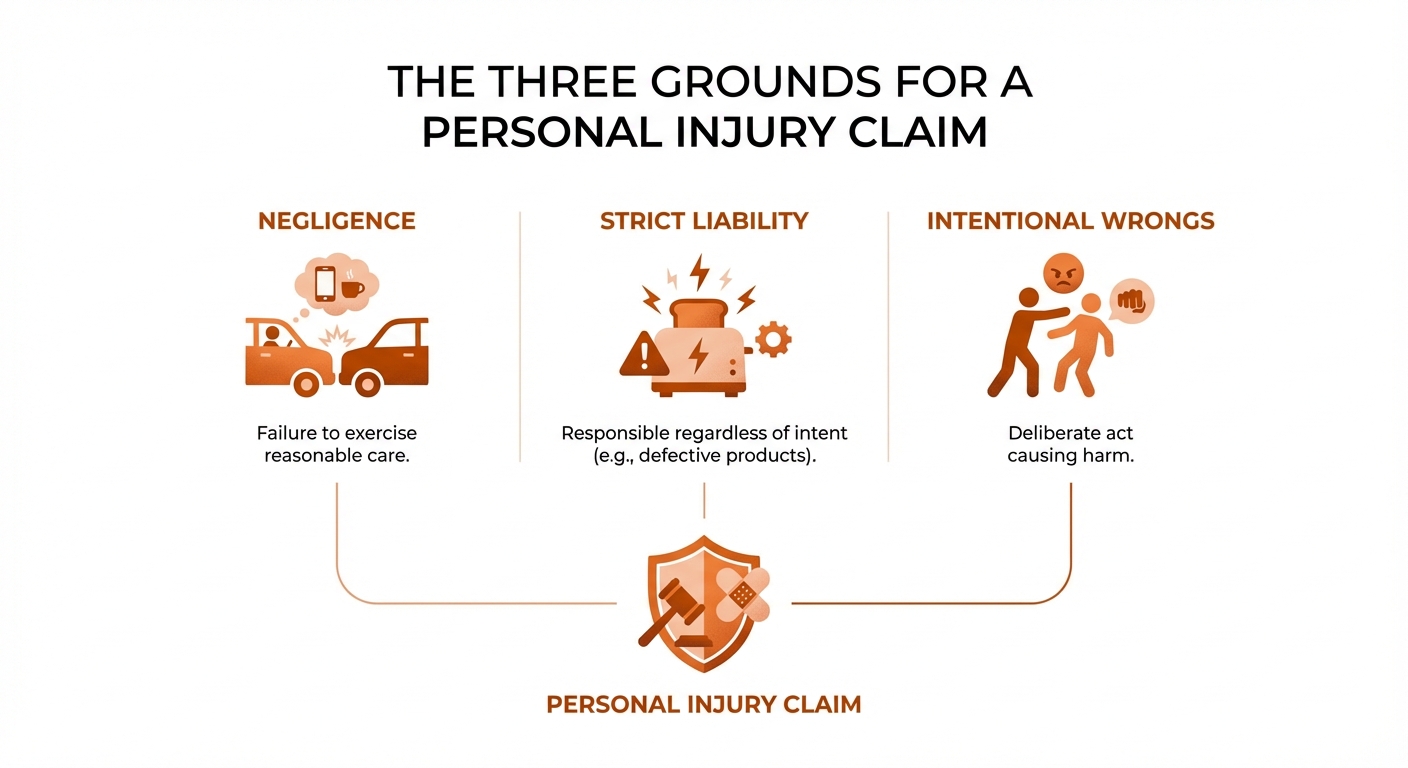
- Negligence: This is the most common basis for personal injury claims. It involves demonstrating that the at-fault party failed to exercise reasonable care, and this failure directly caused your injuries.
- Strict Liability: In certain situations, a party can be held responsible for damages regardless of their intent or negligence. This often applies to cases involving defective products or dangerous activities.
- Intentional Wrongs (Intentional Torts): These claims arise when an individual deliberately acts in a way that causes harm to another. While less common, they can lead to significant compensation for victims.
These legal principles form the bedrock of personal injury law, guiding how claims are investigated, negotiated, and, if necessary, litigated.

The moments immediately following an accident are often chaotic and stressful, but the actions you take can significantly impact the success of any potential personal injury claim. Protecting your rights and gathering crucial information from the outset is paramount.
First and foremost, seek medical attention for your injuries, even if they seem minor. Some injuries, like whiplash or concussions, may not manifest symptoms immediately but can have serious long-term consequences. A medical evaluation not only prioritizes your health but also creates an official record linking your injuries to the accident. This documentation is vital for proving causation later on.
Next, report the incident to the appropriate authorities or property owners. For auto accidents, this means calling the police to file an accident report. For slip and falls, inform the business owner or property manager and ensure an incident report is created. These official reports provide an objective account of the event.
Document the scene thoroughly. If possible and safe to do so, take photographs and videos with your phone. Capture images of vehicle damage, road conditions, skid marks, property defects, weather conditions, and any visible injuries. The more visual evidence you have, the better.
Preserve evidence by not altering the scene or discarding damaged items. If your clothing or personal belongings were damaged, keep them as they may serve as evidence.
Gather witness information, including names, phone numbers, and email addresses. Eyewitness accounts can corroborate your version of events and provide independent perspectives.
Crucially, avoid admitting fault or making statements that could be interpreted as accepting blame. Even a simple “I’m sorry” can be misconstrued and used against you. Stick to the facts when speaking with others at the scene or with insurance adjusters.
Finally, notify your insurance company promptly. While you should avoid giving recorded statements without legal counsel, informing them of the accident is usually a policy requirement. Your insurance company may have different interests than yours, especially if another party is at fault.
Taking these initial steps can lay a strong foundation for your personal injury claim, ensuring that critical evidence is preserved and your health is prioritized.
The Core Components of a Personal Injury Claim

A personal injury claim is fundamentally about establishing two things: that another party was at fault for your injuries (liability) and that you suffered quantifiable harm as a result (damages). The legal system seeks to balance these elements, often weighing evidence and arguments to determine a fair outcome. Understanding how fault is proven and how damages are calculated is central to comprehending the personal injury process. This section digs into these core components, including the crucial role of negligence, strict liability, and intentional torts, as well as how various types of harm are valued. We’ll also explore concepts like shared fault that can influence the final compensation you receive.
Proving Fault: Negligence, Strict Liability, and Intentional Torts
Establishing who is legally responsible for your injuries is the cornerstone of any personal injury claim. The legal system identifies fault through different standards, primarily negligence, strict liability, and intentional torts.
Negligence is the most common basis for proving fault. To establish negligence, you must demonstrate four key elements:
- Duty of Care: The at-fault party owed you a legal duty to act reasonably to prevent harm. For example, drivers have a duty to obey traffic laws, and property owners have a duty to maintain safe premises.
- Breach of Duty: The at-fault party failed to uphold that duty. This could be a driver running a red light or a store owner failing to clean up a spill.
- Causation: The breach of that duty directly caused your injuries. There must be a clear link between the negligent act and the harm you suffered. For a deeper understanding of this crucial link, you might find the legal definition of Causation helpful.
- Resulting Damages: You suffered actual losses or injuries as a result of the negligent act.
Strict Liability applies in situations where a party is held responsible for harm regardless of their intent or whether they acted negligently. This standard is often applied in cases involving:
- Defective Products: Manufacturers and distributors can be held strictly liable for injuries caused by faulty products, even if they took all reasonable precautions in their design, manufacturing, and marketing. If a product causes injury, the manufacturer is responsible.
- Dangerous Activities: Engaging in inherently dangerous activities, such as handling explosives or keeping certain wild animals, can also trigger strict liability.
- Animal Attacks: In many states, dog owners are subject to strict liability for dog bites, meaning they are responsible for injuries even if their dog has never shown aggression before.
Intentional Torts involve deliberate actions taken by a person that cause harm to another. Unlike negligence, where carelessness is the issue, intentional torts require proof that the defendant intended to commit the act that led to the injury. Common examples include:
- Assault: An intentional act that causes another person to reasonably fear immediate harmful or offensive contact.
- Battery: An intentional act that results in harmful or offensive physical contact with another person.
- False Imprisonment: Unlawfully restraining a person against their will.
- Intentional Infliction of Emotional Distress: Extreme and outrageous conduct that intentionally or recklessly causes severe emotional distress to another.
Proving fault requires meticulous investigation, gathering evidence, and often relying on expert testimony to connect the defendant’s actions to your injuries.
Calculating Damages: What Your Claim is Worth
Once fault is established, the next critical step is determining the monetary value of your personal injury claim, known as “damages.” The goal is to compensate you for all losses incurred due to the injury, aiming to make you “whole” again, as much as money can. Damages are typically categorized into economic, non-economic, and sometimes punitive damages.
Economic Damages (Special Damages): These are quantifiable financial losses directly resulting from your injury. They are often easier to calculate because they come with bills, receipts, or wage statements.
- Medical Expenses: This includes past and future costs for doctor visits, hospital stays, surgeries, medications, rehabilitation, physical therapy, and assistive devices.
- Lost Wages and Earning Capacity: Compensation for income you’ve already lost due to being unable to work, as well as future income you may lose if your injuries prevent you from returning to your previous job or working at the same capacity.
- Property Damage: Costs to repair or replace damaged property, such as a vehicle in an auto accident.
- Other Out-of-Pocket Expenses: Travel costs to medical appointments, household assistance, childcare, and other necessary expenses directly related to your recovery.
Non-Economic Damages (General Damages): These are more subjective and harder to quantify, as they compensate for intangible losses that affect your quality of life.
- Pain and Suffering: Compensation for the physical pain, discomfort, and emotional distress caused by your injuries. This can include chronic pain, discomfort during daily activities, and the overall impact on your physical well-being.
- Mental and Emotional Distress: This covers psychological impacts such as anxiety, depression, fear, anger, and even conditions like Post-traumatic stress disorder (PTSD) resulting from the accident.
- Loss of Enjoyment of Life: Compensation for the inability to participate in hobbies, recreational activities, or daily routines you enjoyed before the injury.
- Loss of Consortium: If the injury impacts your relationship with your spouse, they may be able to claim damages for the loss of companionship, affection, and intimacy.
Punitive Damages: In rare cases, if the defendant’s conduct was exceptionally reckless, malicious, or egregious, a court might award punitive damages. These are not meant to compensate the victim but rather to punish the wrongdoer and deter similar conduct in the future. Punitive damages are typically capped by state law and are reserved for the most severe cases of misconduct.
Calculating the full extent of damages requires a thorough assessment of your current and future needs, often involving medical experts, vocational specialists, and economists. An experienced personal injury attorney can help ensure all potential damages are identified and properly valued.
Understanding Shared Fault and Other Defenses
Even if another party is clearly at fault for your injuries, the compensation you receive can be affected by legal doctrines related to shared fault or other defenses raised by the defendant. Understanding these concepts is crucial for managing expectations and strategizing your claim.
Comparative Negligence: Most states follow some form of comparative negligence. This legal principle reduces a plaintiff’s damages award by a percentage equal to their degree of fault in causing the accident. For example, if you are found 20% at fault for an accident and your total damages are $100,000, you would only receive $80,000. There are two main types:
- Pure Comparative Negligence: You can recover damages even if you are mostly at fault (e.g., 99% at fault), though your award will be significantly reduced.
- Modified Comparative Negligence: You can only recover damages if your fault is below a certain threshold (typically 50% or 51%). If you exceed this threshold, you may recover nothing.
Contributory Negligence: A minority of states still adhere to this stricter rule. Under contributory negligence, if you are found even 1% at fault for your injuries, you are completely barred from recovering any damages. This can be a harsh outcome for plaintiffs.
Assumption of Risk: This defense argues that you knowingly and voluntarily exposed yourself to a specific risk of injury. For instance, if you sign a waiver before participating in a dangerous recreational activity, you might be deemed to have assumed the risks inherent in that activity.
Pre-Existing Conditions: Defendants often try to argue that your injuries were not caused by the accident but rather by a pre-existing condition. However, the “eggshell skull” rule (or “thin skull” rule) states that a defendant must take their victim as they find them. This means if the accident aggravated a pre-existing condition or caused a more severe injury to someone with a particular vulnerability, the defendant is still liable for the full extent of the harm caused. Proving the aggravation of a pre-existing condition often requires detailed medical evidence and expert testimony.
Other Defenses: Defendants might also argue that their actions were not the proximate cause of your injuries, that there was an intervening event, or that your claim is barred by the statute of limitations. Navigating these complex liability issues and potential defenses often requires the expertise of a seasoned legal professional. For those seeking comprehensive assistance with their claim, a Slam Dunk Attorney personal injury claim can be an incredibly beneficial resource.
Navigating the Legal Process: From Insurance Claim to Lawsuit
The journey of a personal injury claim can be complex, involving multiple stages from initial contact with insurance companies to, in some cases, a full-blown trial. While many claims are resolved through informal negotiations, understanding the formal legal procedures is essential. This section guides you through the typical progression, from the initial insurance claim and potential settlement discussions to the more structured environment of a formal lawsuit, including findy, mediation, and the possibility of a trial.
The Initial Phase: Insurance Claims and Informal Settlements
For most personal injury claims, the process begins with an insurance claim against the at-fault party’s insurer. This initial phase is characterized by negotiation and aims for an informal settlement, avoiding the need for a lawsuit.
The insurance adjuster plays a central role here. After you notify your insurance company (and they, in turn, notify the other party’s insurer), an adjuster will investigate the accident. Their goal is to determine liability and assess the value of the claim from their company’s perspective, which is often to minimize payouts. They may request medical records, accident reports, and even recorded statements. It’s crucial to be cautious when interacting with adjusters and to avoid giving recorded statements or signing releases without legal advice.
Once your medical treatment is complete or your condition has stabilized, your attorney (if you have one) will typically send a demand letter to the insurance company. This letter outlines the facts of the accident, details your injuries, lists all damages (medical bills, lost wages, pain and suffering), and demands a specific amount for settlement.
This initiates the negotiation process. The insurance company will usually respond with a counter-offer, which is often lower than your demand. This back-and-forth can continue for some time, with both sides presenting arguments and evidence to support their valuation.
The vast majority of personal injury lawsuits are settled before trial. This statistic highlights the efficiency of informal settlements. Resolving a claim through negotiation can save time, reduce legal costs, and provide a more predictable outcome compared to the uncertainties of a trial. However, ensure that any settlement adequately compensates you for all your losses, both current and future. If a fair settlement cannot be reached through negotiation, the next step may be to consider a formal lawsuit.
Escalating to a Formal Lawsuit: What to Expect
If informal negotiations with the insurance company fail to produce a satisfactory settlement, your personal injury claim may escalate to a formal lawsuit. This marks a significant shift in the process, moving from private negotiations to the structured rules of the court system.
The first step in a formal lawsuit is filing a complaint with the appropriate court. This document officially initiates the legal action, naming you as the plaintiff and the at-fault party as the defendant. The complaint outlines the legal basis for your claim, the facts of the accident, and the damages you are seeking. The defendant is then formally served with the complaint and has a limited time to respond.
Following the filing of the complaint and the defendant’s answer, the lawsuit enters the findy process. This is a critical phase where both sides gather information and evidence from each other to prepare for trial or further settlement negotiations. Findy can involve:
- Interrogatories: Written questions sent by one party to another, which must be answered under oath.
- Depositions: Oral testimonies taken under oath outside of court, where parties and witnesses are questioned by attorneys.
- Requests for Production of Documents: Demands for relevant documents, such as medical records, accident reports, employment records, and insurance policies.
- Requests for Admissions: Written requests asking the other party to admit or deny certain facts, which can streamline the trial by narrowing down disputed issues.
The findy process can be extensive and time-consuming, often lasting several months to over a year, depending on the complexity of the case. It is designed to prevent surprises at trial and ensure both sides have access to pertinent information.
During or after the findy phase, parties often engage in mediation. This is a form of alternative dispute resolution where a neutral third party (the mediator) facilitates communication and negotiation between the plaintiff and defendant. The mediator does not make a decision but helps the parties explore settlement options. Mediation is highly effective, with many cases resolving during this stage, as it offers a less adversarial environment than a courtroom. For those seeking comprehensive support for Barzakay personal injury claims, a dedicated legal team can be invaluable in navigating these complex stages.
The Final Stages: Trial vs. Settlement Outcomes
As a personal injury lawsuit progresses, it will ultimately lead to one of two primary outcomes: a settlement or a court trial. Each path has distinct characteristics and implications for the injured party.
A pre-trial settlement is by far the most common resolution for personal injury claims. As mentioned earlier, the vast majority of personal injury lawsuits are settled before trial. This can occur at any point during the legal process—after initial negotiations, during findy, or even on the courthouse steps. A settlement involves a formal agreement between the plaintiff and the defendant (or their insurance company) to resolve the claim for a specified amount of money, typically in exchange for the plaintiff dropping the lawsuit. Settlements offer certainty, avoid the time and expense of a trial, and allow both parties to move forward.
If a settlement cannot be reached, the case proceeds to a court trial. This is a formal legal proceeding where both sides present their evidence, call witnesses, and make arguments before a judge or jury. The jury (or judge, in a bench trial) will then deliberate and render a jury verdict, determining liability and the amount of damages, if any, to be awarded to the plaintiff. Trials are often lengthy, unpredictable, and emotionally taxing.
If the plaintiff wins at trial, the court issues a judgment in their favor. The defendant is then legally obligated to pay the awarded damages. In some cases, if the defendant does not pay voluntarily, the plaintiff may need to pursue judgment collection efforts, which can involve garnishing wages, seizing assets, or placing liens on property.
Finally, either party may have the right to file an appeals process if they believe there were significant legal errors during the trial that affected the outcome. Appeals can prolong the legal battle for months or even years and are typically focused on legal questions rather than re-litigating facts. Understanding these potential outcomes helps manage expectations and informs strategic decisions throughout the personal injury claim process.
Key Deadlines and Jurisdictional Rules
One of the most critical aspects of any personal injury claim is understanding and adhering to strict deadlines, known as the statute of limitations. This is a law that sets the maximum time after an event within which legal proceedings may be initiated. If you fail to file your lawsuit within this timeframe, you will almost certainly lose your right to pursue compensation, regardless of the merits of your case.
The statute of limitations varies significantly by state and by the type of injury or claim. For instance, while many states allow two or three years to file a personal injury lawsuit, others have much shorter windows. A notable example is Louisiana, where the deadline for filing a personal injury claim in a civil court is only one year. This short timeframe underscores the urgency of seeking legal advice promptly after an accident. In contrast, in England, the most common claim in a personal injury case is negligence, with a time limit of 3 years to begin legal action.
These state law variations mean that what applies in one jurisdiction may not apply in another. Some states also have different deadlines for specific types of claims, such as medical malpractice, claims against government entities, or cases involving minors. The time limit generally begins when you are injured or when you find your injury. However, there can be exceptions, such as the “findy rule,” which extends the deadline if the injury was not immediately apparent.
Beyond the statute of limitations, other jurisdictional rules can impact your claim, including rules regarding comparative negligence, damage caps, and specific procedural requirements for filing documents or conducting findy. It is imperative to consult with a legal professional who is familiar with the laws of the jurisdiction where your accident occurred to ensure all deadlines are met and all rules are followed. Missing a deadline can be a fatal blow to your claim, making timely action and expert guidance indispensable.
Frequently Asked Questions about Personal Injury Claims
We understand that navigating the aftermath of an accident and the complexities of a personal injury claim can raise many questions. Here, we address some of the most common inquiries to provide further clarity and guidance.
What are the most common causes of personal injury claims?
Personal injury claims arise from a wide array of incidents where one party’s negligence or wrongful action leads to harm for another. While the specifics can vary, some common causes frequently lead to claims:
- Auto Accidents: These are by far the most prevalent, including car, truck, motorcycle, pedestrian, and bicycle accidents. Negligent driving, such as speeding, distracted driving, or impaired driving, is often the root cause.
- Medical Malpractice: Claims arise when a healthcare professional’s negligence or error leads to patient injury. This can include misdiagnosis, surgical errors, birth injuries, or medication mistakes.
- Product Defects: When a consumer product is designed, manufactured, or marketed defectively, causing injury, the responsible parties (manufacturers, distributors) can be held liable under strict liability.
- Premises Liability (Slip and Fall): Property owners have a duty to maintain a safe environment for visitors. Claims can result from slip and fall accidents due to hazards like wet floors, uneven surfaces, poor lighting, or inadequate security leading to criminal attacks.
- Workplace Accidents: Injuries sustained on the job, often due to unsafe working conditions, equipment malfunction, or employer negligence. While workers’ compensation typically covers these, third-party claims may also be possible.
- Dog Bites: Many states hold dog owners strictly liable for injuries caused by their pets, particularly dog bites, regardless of the dog’s prior history of aggression.
These are just a few examples, but they illustrate the broad scope of incidents that can give rise to a personal injury claim.
Do most personal injury cases go to trial?
Despite what legal dramas on television might suggest, the vast majority of personal injury lawsuits are settled before trial. Statistics consistently show that a very small percentage—often less than 5%—of personal injury cases actually make it to a courtroom verdict.
This preference for settlement stems from several factors:
- Efficiency: Settlements are generally quicker and less expensive than trials.
- Predictability: A settlement offers a guaranteed outcome, whereas a trial carries inherent risks and uncertainties for both sides.
- Control: In a settlement, both parties have a say in the outcome. In a trial, a judge or jury makes the final decision.
- Privacy: Settlements are often confidential, while trial proceedings are public record.
The process typically involves an informal settlement phase, where attorneys negotiate directly with insurance adjusters. If this fails, the case may proceed to a formal lawsuit, but even then, mechanisms like mediation are often employed to facilitate a resolution outside of court. Mediation involves a neutral third party who helps the disputing parties reach a mutually acceptable agreement. Only when all settlement avenues have been exhausted, and the parties remain far apart on key issues, does a case typically proceed to trial.
How does a pre-existing condition affect my personal injury claim?
A pre-existing condition refers to any health issue or injury you had before the accident occurred. It’s a common defense tactic for the at-fault party’s insurance company to argue that your current pain or injury is due to this pre-existing condition, not their client’s negligence. However, a pre-existing condition does not automatically bar you from recovering compensation.
The key legal principle here is the “eggshell skull” rule (sometimes called the “thin skull” rule). This rule states that a defendant must “take their victim as they find them.” This means if the accident aggravated your pre-existing condition, making it worse, or if it caused a more severe injury because of your particular vulnerability, the at-fault party is still liable for all the harm they caused. They cannot argue that a “normal” person would not have been as severely injured.
For example, if you had a pre-existing back condition that was stable, but a car accident caused a herniated disc and significant new pain, the at-fault driver would likely be responsible for the aggravation of your condition.
To successfully claim damages when a pre-existing condition is involved, you’ll need strong medical evidence. This typically includes:
- Medical records from before and after the accident.
- Testimony from your treating physicians explaining how the accident impacted your pre-existing condition.
- Possibly expert medical opinions to establish the causal link and the extent of the aggravation.
The challenge lies in proving causation—that the accident either caused a new injury or significantly worsened a pre-existing one. An experienced personal injury attorney can help gather the necessary medical documentation and expert testimony to build a compelling case, demonstrating the full extent of the harm caused by the defendant’s actions.
Conclusion
Navigating the aftermath of an accident and pursuing a personal injury claim can be an overwhelming experience. From the initial shock and physical pain to the complex legal procedures, it’s a journey fraught with challenges. However, understanding the fundamental principles and steps involved is your most powerful tool in seeking justice and fair compensation.
We’ve explored what constitutes a personal injury claim, the critical first steps to take immediately after an accident, and the core components of proving fault and calculating damages. We’ve also digd into the legal process, from informal settlements and insurance negotiations to the more formal stages of a lawsuit, including findy and potential trials. Crucially, we’ve highlighted the importance of adhering to key deadlines, such as the statute of limitations, and understanding how jurisdictional rules and factors like pre-existing conditions can impact your case.
The vast majority of personal injury cases settle outside of court, but achieving a fair settlement often requires thorough preparation, strong evidence, and skilled negotiation. Protecting your rights and ensuring you receive the compensation you deserve means being proactive, documenting everything, and seeking timely advice. If you or a loved one has been injured due to someone else’s negligence, don’t hesitate to consult with a qualified legal professional. Their expertise can provide invaluable guidance, allowing you to focus on your recovery while they advocate for your best interests.